For more than three decades, I have helped individuals, couples, and professionals understand one of the most misunderstood realities of emotional suffering:
Helping People Heal the Way the Nervous System Actually Works
Most people are not failing because they lack insight. They are struggling because their nervous system is still organized around survival rather than safety.
This realization has shaped my life’s work.
As a psychotherapist, educator, coach, and author, I have spent years integrating the fields of attachment science, interpersonal neurobiology, Polyvagal Theory, trauma research, EMDR, Internal Family Systems, and relational psychology into a practical framework that helps people move beyond merely understanding their pain—and begin genuinely healing it.
That work became the foundation of the Relational Nervous System Integration Model™ (RNSI).
Rather than treating trauma as a collection of symptoms, RNSI explains how our relationships shape the nervous system, how survival patterns become deeply embedded, and how those patterns can be reorganized through experiences of safety, connection, and intentional practice.
Why I Created the Relational Nervous System Integration Model™
Throughout my career I noticed something that troubled me.
Many intelligent, insightful people understood exactly why they struggled.
They had read the books.
They knew their childhood stories.
They could explain their patterns in remarkable detail.
Yet when life became stressful, they found themselves reacting in exactly the same ways.
Not because they lacked motivation.
Because their nervous system had never learned another way.
I became convinced that lasting change requires more than awareness.
It requires helping the body experience safety deeply enough that old survival patterns no longer feel necessary.
The Relational Nervous System Integration Model™ was developed to provide that roadmap.
My Work Today
Today my work centers on helping people:
- Recover from developmental and relational trauma.
- Understand why old patterns continue despite insight.
- Strengthen nervous system regulation.
- Build relationships characterized by genuine safety and secure attachment.
- Reclaim their voice, confidence, and capacity for meaningful connection.
Whether through books, speaking, education, coaching, or media interviews, my goal is always the same:
To translate complex neuroscience into practical wisdom that changes everyday life.
Author
Dr. Russell is the author of:
- The Trauma Recovery Blueprint
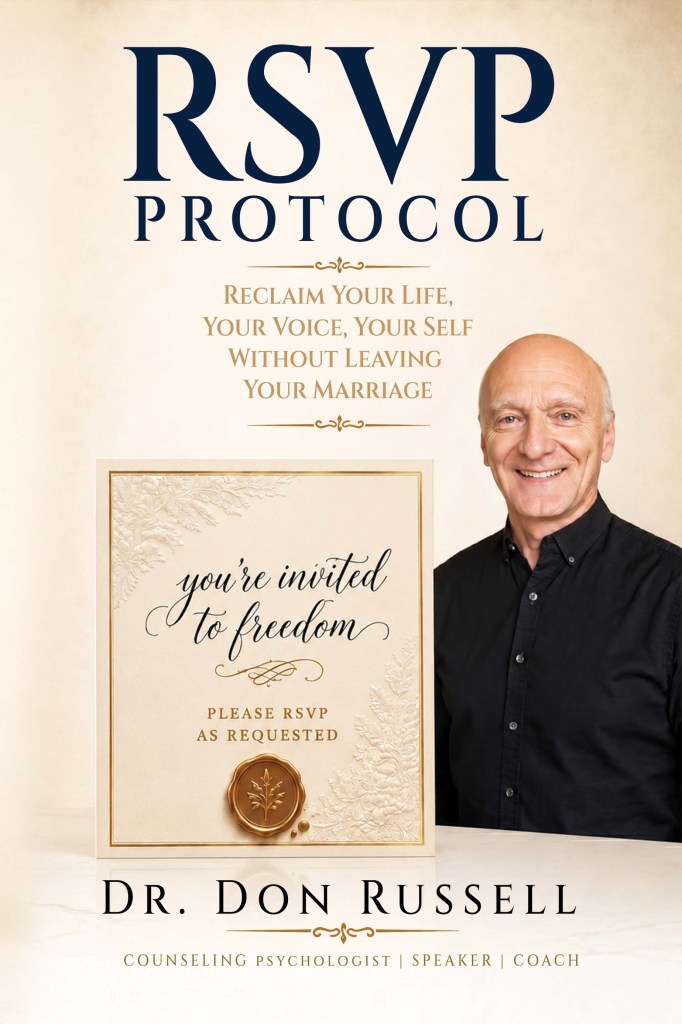
- The RSVP Protocol
His writing combines current neuroscience with decades of clinical experience to offer practical tools that readers can immediately begin applying in their own lives.
Professional Background
Dr. Russell has spent more than thirty years working in mental health, education, and professional training.
His work integrates research from multiple disciplines, including:
- Attachment Theory
- Interpersonal Neurobiology
- Polyvagal Theory
- EMDR
- Internal Family Systems (IFS)
- Affect Regulation
- Trauma Recovery Science
He is known for making complex psychological concepts understandable without sacrificing scientific integrity.
Speaking & Media
Dr. Russell regularly speaks on topics including:
- Trauma Recovery
- Nervous System Regulation
- Relationships and Attachment
- Psychological Safety
- Resilience
- Leadership and Emotional Intelligence
- Relational Neuroscience
His presentations are known for combining scientific rigor with warmth, practical application, and hope.
My Philosophy
I believe people are far more resilient than they realize.
Healing is not about becoming someone different.
It is about creating enough safety that your authentic self no longer needs to hide behind survival.
When the nervous system learns safety…
Relationships change.
Decisions become clearer.
The body begins to relax.
And people discover that healing is not simply possible—
it is teachable.